
Marine VHF Antenna Types
Four things separate one marine VHF antenna from another: gain, length, mount style and connector. Here is what each one changes on the water — and every Scout model that fits.
Gain: 3dB or 6dB
A VHF antenna does not amplify anything. Gain describes how it reshapes the signal it is given. A 3dB antenna radiates in a fat doughnut; a 6dB antenna squeezes that same energy into a flatter, wider disc that reaches further across the water but is thinner vertically.
That thinness is the whole trade. On a stable hull the flat beam is pure benefit. On a small boat that rolls, a 6dB beam spends half its time aimed at the sky and the other half at the water, and the conversation drops out at the worst moment. The working rule: under 20ft use 3dB, 20–35ft use 6dB, and above 35ft use 6dB at the greatest length you can mount. Full detail in antenna gain explained.
Length, and what it does to range
VHF is line of sight, so range is decided by how high the antenna tip sits above the water, not by transmitter power. Adding height buys distance faster than anything else you can change. An 8ft antenna on a hardtop routinely outperforms the same antenna on a gunwale rail by a wide margin, which is why 8ft antenna range is the question people actually mean when they ask about power. Work out your own figure with the VHF range calculator, or read what determines VHF range.
Scout builds from 3ft to 8ft. The KS-41 exists because that trade is awkward on a centre console: it puts 8ft-class construction into a 4ft body. See antennas for a centre console and collinear antennas for the longer end of the range.
Mount style
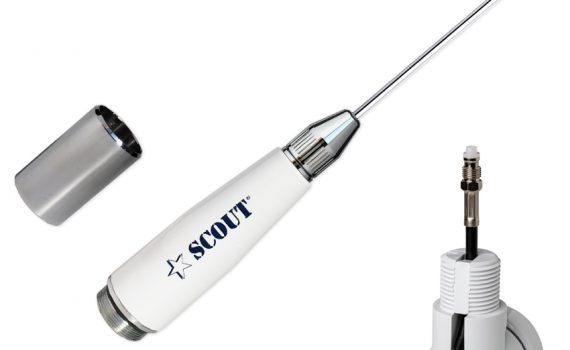
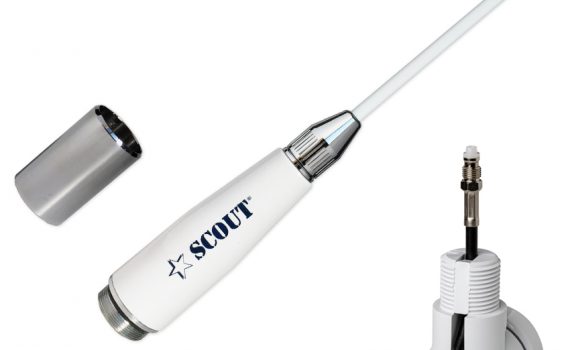
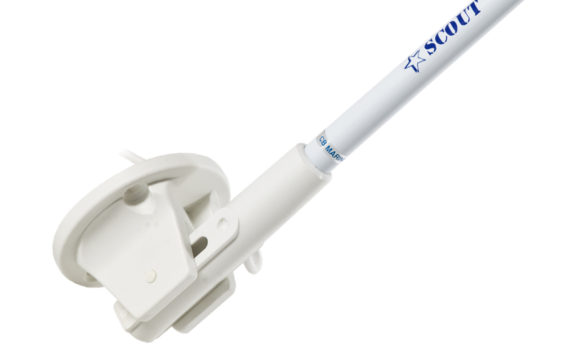
The ferrule at the base is a standard 1"-14 thread, so the antenna and the mount are separate decisions. Ratchet mounts fold the antenna down for bridges and trailering and are the usual choice on open boats. Fixed and rail mounts are stiffer and better suited to a hardtop where nothing needs to fold. A quick-release fitting like QuickFit lets the antenna come off entirely for storage or theft. Mount options are compared in best VHF antenna mounts.
Cable and connector
Every Scout antenna ships with its cable already fitted, terminated in a PL-259 — the standard marine VHF radio connector. Cable type matters over distance: RG-58 is thinner and easier to route, RG-8X loses less signal over a long run, so longer cable runs favour RG-8X.
Connectors are the single most common failure point on a marine VHF installation, and almost always because water reached the braid and wicked up inside it. The step-by-step fitting and sealing procedure is in the VHF antenna installation guide; if an existing antenna has gone quiet, start with VHF antenna troubleshooting. Terms used above are defined in the marine antenna glossary.
Construction
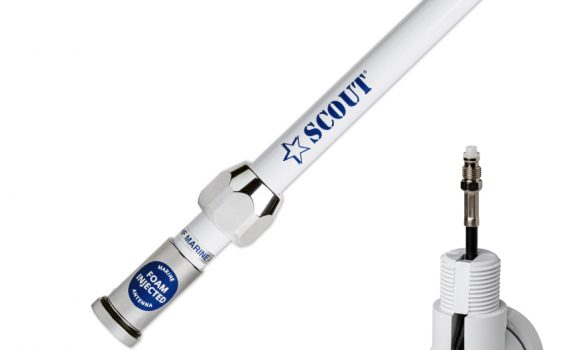
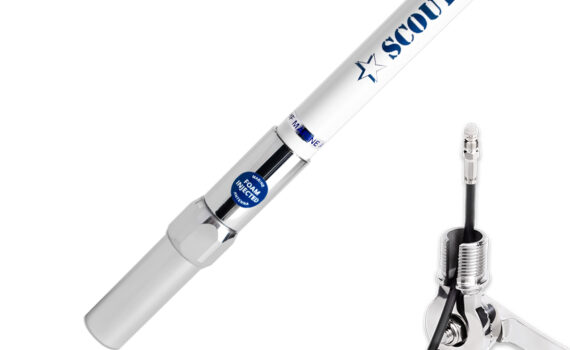
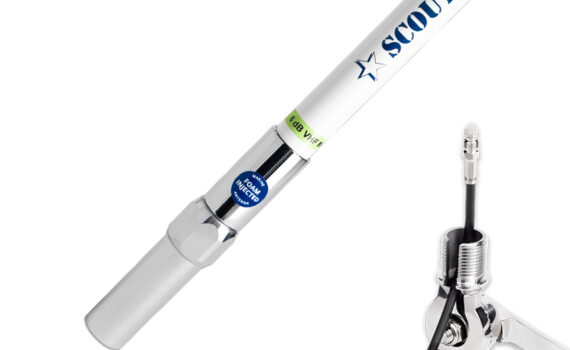
Two antennas with identical published specifications can behave very differently after three seasons. A hollow fibreglass whip takes on water through the smallest crack and the signal degrades quietly; a foam-filled body has nowhere for water to sit. That is the difference foam injection makes, and it is why it does not appear on a specification sheet. Not sure which model you need? The antenna selector narrows it in three questions, compare every model at once in the antenna comparison table, or go straight to our ranked picks for the best marine antennas by boat size.
Every Scout VHF antenna, with price
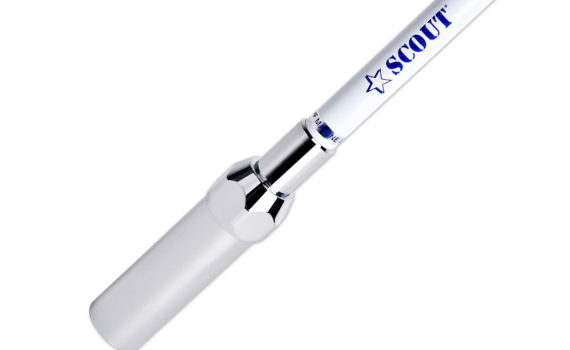
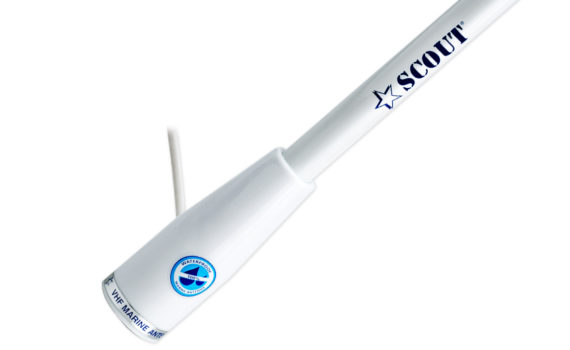
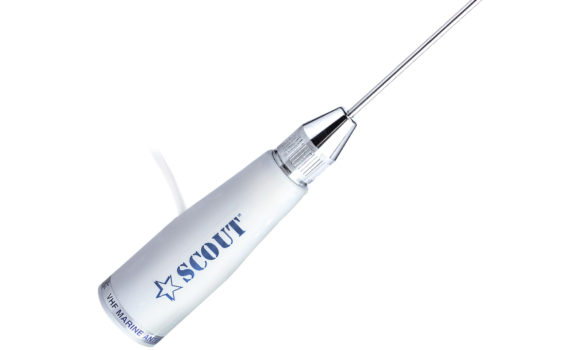
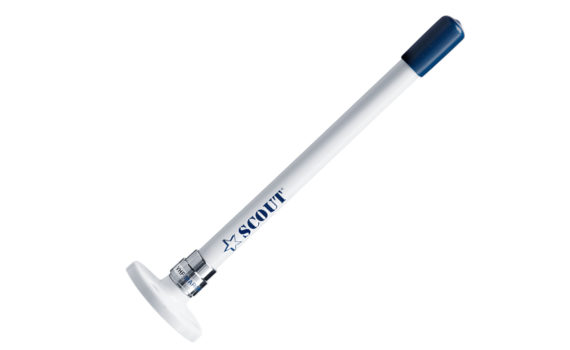
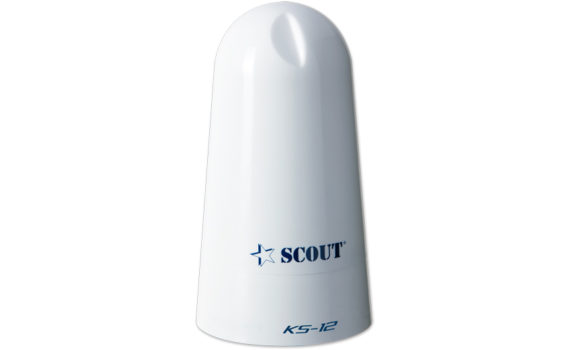
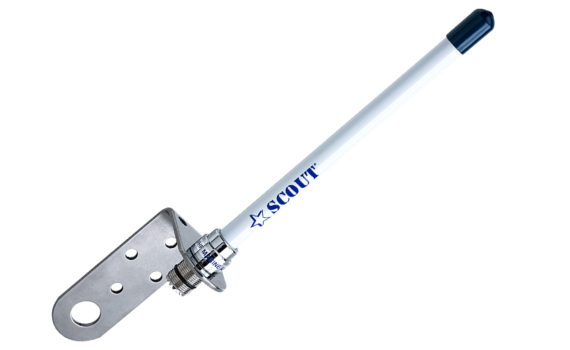
19 models from 8 in to 8 ft. All 100% foam-filled, cable and PL-259 included, 5-year warranty, made in Italy. Prices are US list; colour editions are on each model's page.



Frequently Asked Questions
Common questions about marine VHF antennas